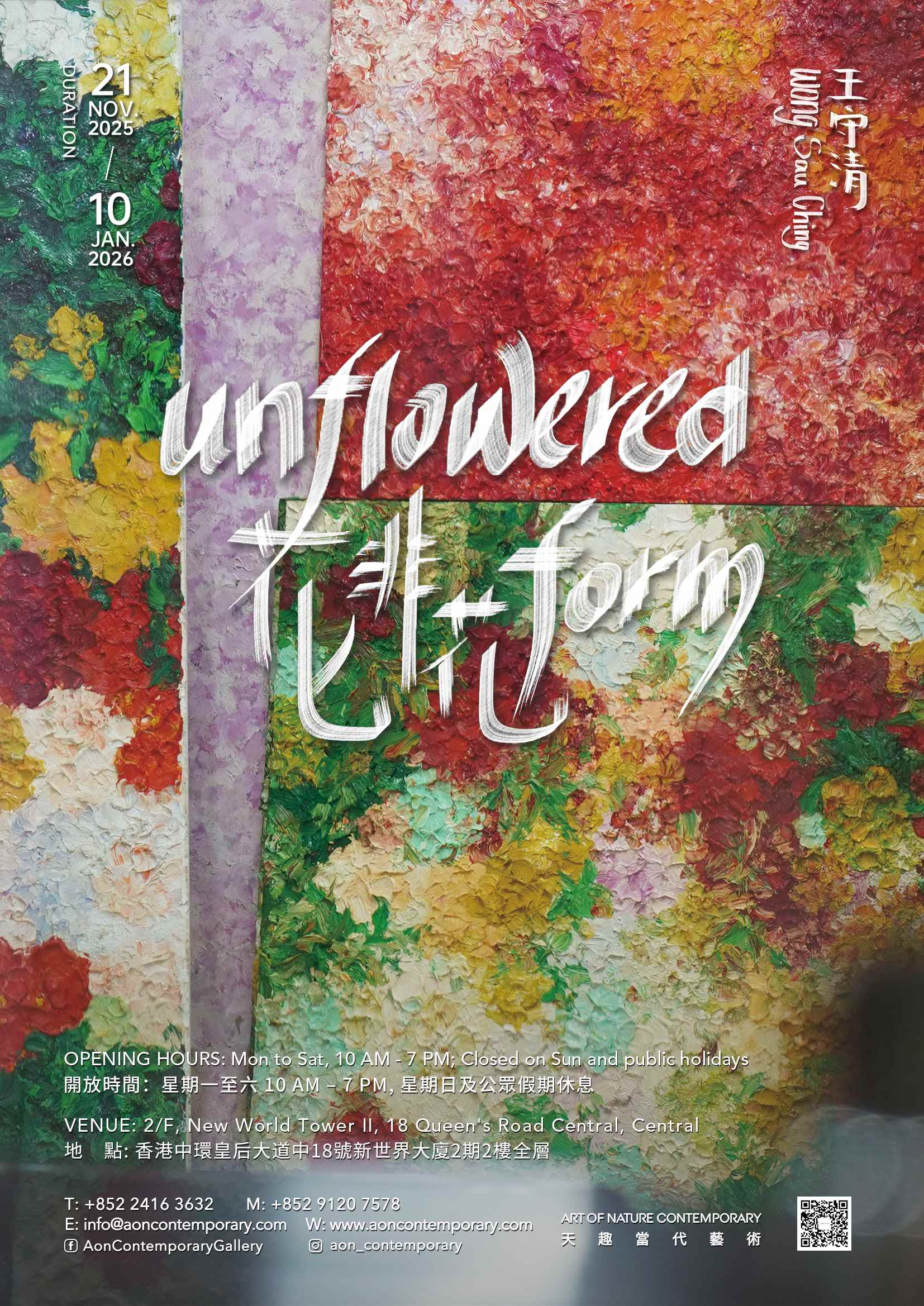
After experiencing layers of inner transformation, Wong Sau Ching redirected his creative path toward a journey of self-return. Amid the collective melancholy of the post-pandemic era, he chose the motif of flowers as a medium for spiritual restoration. Wandering through flower markets, shops, and gardens, he discovered a healing rhythm within the quiet repetition of everyday life. In his paintings, flowers are no longer literal forms but projections of consciousness, where memory and perception overlap. The layered hues on his canvas resemble mist-like sediments of emotion, occasionally revealing the red blossoms on quilts and pillows from his childhood, stitched by his mother’s hands, a vision of deep self-healing.
Wong transforms the imagery of flowers into a dialogue with the past. Each creative phase becomes a reflection and rethinking of the preceding one. The emergence of new works marks the revision and expansion of earlier ideas. Flowers serve as vessels of spiritual renewal and as his ongoing conversation with self and time. Between their blooming and withering, ideas shift, and the artist’s state of mind gently restores itself.
經歷多重潛在經驗後,王守清將創作重新導向自我回返的路徑。在後疫情時期集體情緒的低潮中,藝術家以「花」為媒介,作為一種精神修復的手段。走進花墟、花店與花園,他在重複性的日常中尋找治癒的節奏。花在他的畫中不再是具象的花,而是意識的投射,是記憶與感知的交疊。畫面的層疊色彩,像是霧氣般的情緒沉積,偶然顯影出童年記憶中母親縫製被單與枕頭上的紅花——那是一種深層的自愈圖景。
王守清將「花」的意象轉化為對「過去」的回應。每一階段的創作,都是一次對前一階段問題的回望與再思考。當新的創作開始時,便意味著對舊有觀念的修正與延展。花成為精神療愈的載體,也是藝術家不斷回應自我與時間的方式。花開花謝之間,觀念在更迭,藝術家的心境亦在修復。